There is a particular kind of worry that parents and teachers share but rarely say out loud. It is the quiet fear that a student is falling behind, not dramatically, not in a way that triggers immediate alarm, but slowly and silently, in ways that will only become fully visible later when the gap has grown wide enough to be genuinely difficult to close. Academic progress is not always loud. Sometimes it slips away in small, incremental steps that no single test or report card captures on its own. And that is precisely why tracking it with intention, consistency, and the right strategies matters so deeply. When you monitor academic progress properly, you do not just measure where a student is. You understand where they are headed, what is holding them back, and exactly what kind of support will move them forward. This guide brings together the most proven, research-supported strategies for monitoring and enhancing academic progress in ways that work for students at every level.
Why Monitoring Academic Progress Is More Than Just Checking Grades
Most people equate academic progress with grades. A student gets an A and things are going well. They get a C and something needs to change. But this framing is dangerously incomplete. Grades are a lagging indicator. They tell you what already happened, often weeks after the learning moment passed and the window for timely intervention closed. Genuine academic progress monitoring is a forward-looking practice. It is about gathering ongoing data, identifying patterns, and making informed decisions while there is still time to make a meaningful difference.
The Difference Between Assessment and Progress Monitoring
Assessment and progress monitoring are related but fundamentally different practices. Assessment typically refers to formal evaluations like tests, quizzes, and standardized exams that measure what a student knows at a single point in time. Progress monitoring is a continuous process that tracks how a student is developing over time relative to a defined goal or benchmark. The distinction matters enormously in practice. A student who fails a unit test has been assessed. A student whose weekly reading fluency scores are tracked over a semester and show a consistent plateau despite intervention has been monitored, and that monitoring enables a much more nuanced and actionable response than a single failing grade ever could. Progress monitoring treats learning as a trajectory rather than a snapshot, which is a far more accurate and useful way to understand how a student is actually developing.
What Happens When Progress Goes Untracked
When academic progress is not systematically monitored, small problems have time and space to become large ones. A student who struggles with foundational reading skills in second grade but is never formally tracked will often enter third grade with gaps that make every subsequent year harder. A high school student who is quietly disengaging from mathematics may still pass courses by test-cramming while the conceptual foundation erodes beneath them. Research from the National Center on Student Progress Monitoring consistently shows that students whose progress is regularly measured and responded to achieve significantly better academic outcomes than those whose progress is only evaluated through periodic formal assessments. The monitoring itself is not magic. It is the informed, timely response that monitoring enables that produces the real gains.
Building a Foundation: Setting Clear Academic Benchmarks
You cannot track progress without knowing what you are tracking toward. Clear, well-defined academic benchmarks are the starting point of any meaningful progress monitoring system. Benchmarks serve as the reference points against which student performance is measured, and they need to be grounded in realistic, evidence-based expectations rather than vague aspirations or arbitrary standards.
How to Set Meaningful Goals That Drive Real Growth
Effective academic benchmarks share several characteristics. They are specific enough to be measurable, meaning they describe a concrete, observable outcome rather than a general desire for improvement. They are ambitious enough to stretch the student beyond their current level without being so unrealistic that they become discouraging. And they are time-bound, tied to a specific period so that progress can be evaluated against a meaningful deadline. The SMART goal framework, which stands for Specific, Measurable, Achievable, Relevant, and Time-bound, is widely used in educational settings precisely because it forces the kind of precision that makes progress tracking possible. A goal like “improve in reading” cannot be tracked. A goal like “increase oral reading fluency from 85 words per minute to 110 words per minute by the end of the semester” provides a clear baseline, a clear target, and a clear timeline that makes every intermediate measurement meaningful.
Aligning Benchmarks With Developmental and Curricular Standards
Individual goals are most useful when they are aligned with broader developmental expectations and curricular standards. Grade-level standards, whether national frameworks or local curriculum guides, provide a map of what students are expected to know and be able to do at each stage of their education. When personal academic benchmarks are built in dialogue with those standards, it becomes possible to identify not just whether a student is improving relative to their own baseline but whether they are on a trajectory to meet grade-level expectations within a reasonable timeframe. This dual-level analysis, comparing growth to both personal starting points and broader benchmarks, gives educators and families a much more complete picture of where a student stands and what kind of support intensity is appropriate.
Formative Assessment Tools That Actually Reveal Learning in Real Time
Formative assessment is one of the most powerful tools available for monitoring academic progress, and it is also one of the most misunderstood. Many educators treat formative assessment as a precursor to the “real” assessment, a series of low-stakes checks before the summative exam that actually counts. But research by education scholars John Hattie and Dylan Wiliam has repeatedly demonstrated that well-executed formative assessment, when used to inform and adjust instruction in real time, produces some of the largest and most consistent gains in student achievement of any educational intervention available.
Exit Tickets, Observation Logs, and Learning Portfolios
Exit tickets are among the simplest and most effective formative tools available. At the end of a lesson or class period, students respond to one or two targeted questions that reveal whether they have grasped the core concept of the session. The teacher reviews the responses and uses that real-time data to decide whether to reteach, extend, or move forward. This creates a tight feedback loop between instruction and learning that traditional end-of-unit tests simply cannot replicate. Observation logs, in which teachers record structured notes on individual student behaviors, responses, and engagement during learning activities, provide a qualitative layer of data that standardized measures often miss. They capture how a student approaches a problem, where they hesitate, and what strategies they instinctively reach for, all of which are diagnostically rich signals. Learning portfolios take a longer view, collecting samples of student work over time so that growth becomes literally visible through the evolution of the work itself. A portfolio that contains writing samples from September through May tells a story that no single essay or test score can match.
Digital Tools That Streamline Ongoing Data Collection
Technology has dramatically expanded what is practically possible in progress monitoring. Platforms like Google Classroom, Seesaw, Khan Academy, and various learning management systems now allow educators to collect, organize, and analyze student performance data with a speed and efficiency that was unimaginable in the paper-based classroom. Adaptive learning platforms are particularly powerful because they adjust the difficulty of tasks in real time based on student responses, creating a continuous, low-burden stream of performance data while simultaneously personalizing the learning experience. For classroom teachers managing twenty-five or thirty students simultaneously, these digital tools do not replace pedagogical judgment but they do make it possible to stay genuinely informed about each student’s progress in ways that manual tracking alone cannot sustain.
The Role of Data-Driven Instruction in Enhancing Student Outcomes
Collecting data on academic progress is only half the equation. The other half, and arguably the more important half, is using that data to make better instructional decisions. Data-driven instruction is the practice of systematically analyzing student performance information and using it to adjust teaching approaches, intervention intensity, and resource allocation. When done well, it transforms monitoring from a passive reporting activity into an active engine of academic improvement.
Reading the Data: Patterns That Signal the Need for Intervention
Not all academic struggles look the same in the data, and experienced educators learn to read the patterns rather than just the numbers. A student whose scores are consistently below benchmark but show a steady upward trend is in a very different situation from a student whose scores are flat or declining despite intervention. A student who performs well on independent tasks but struggles significantly on collaborative or timed assessments may be dealing with anxiety or processing speed differences rather than content gaps. A student who excels in class but underperforms on standardized tests may lack specific test-taking strategies rather than content knowledge. Each of these patterns calls for a different response, and that differentiation is only possible when there is enough data collected over enough time to see the pattern clearly. Single-point assessments cannot reveal these nuances. Ongoing monitoring can.
Differentiating Instruction Based on Progress Data
One of the most direct applications of progress monitoring data is differentiating instruction, adjusting the content, pace, format, or support level of instruction to better match each student’s current needs. A student who is consistently ahead of benchmark may need extension tasks, enrichment opportunities, or accelerated content to stay genuinely engaged and challenged. A student who is consistently below benchmark may need more explicit instruction, more practice repetitions, smaller group work, or scaffolded materials that reduce cognitive load while maintaining engagement with grade-level concepts. Differentiation based on real-time progress data is fundamentally more responsive and more accurate than differentiation based on initial placement assessments alone because it reflects how a student is actually developing rather than how they performed on a single evaluation at the start of the year.
Involving Students in Tracking Their Own Academic Progress
One of the most underutilized strategies in academic progress monitoring is student self-tracking. When students understand their own learning goals, see their own data, and participate actively in interpreting and responding to it, something powerful happens. They shift from passive recipients of education into active partners in their own growth, and that shift has a measurable and meaningful impact on motivation, self-efficacy, and academic outcomes.
Teaching Students to Interpret Their Own Data
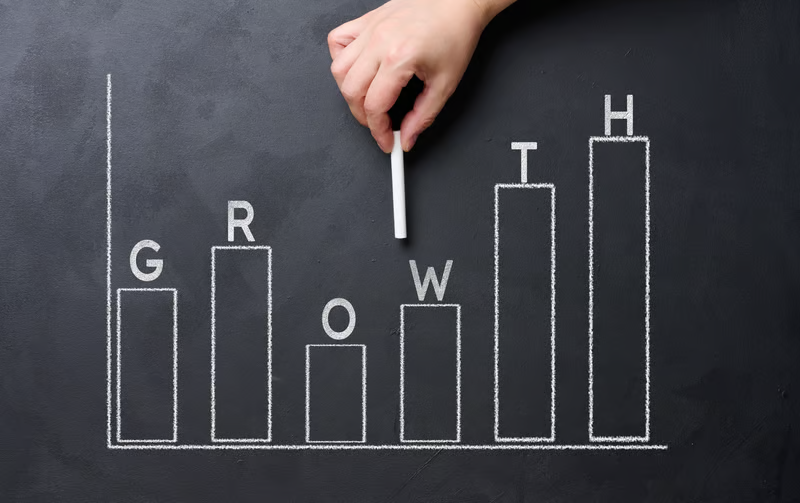
Student-led progress monitoring begins with making data accessible and understandable. A third grader can understand a simple graph showing their reading fluency scores over time. A high school student can analyze their own quiz performance by question category to identify which concepts they have mastered and which need more attention. When students can see their own growth visually, the impact on motivation is immediate. Growth that felt invisible becomes concrete. Effort that seemed unrewarded becomes visibly connected to improvement. Research by educational psychologist Carol Dweck, whose work on growth mindset has shaped education policy worldwide, suggests that students who understand their performance as a reflection of strategy and effort rather than fixed ability are far more likely to persist through difficulty and ultimately reach higher levels of achievement.
Goal-Setting Conferences Between Students and Educators
Regular one-on-one goal-setting conferences between students and their teachers or counselors are one of the highest-leverage practices in academic progress support. These conversations, even when brief, send a powerful message to the student that their growth matters, that an adult is paying attention, and that there is a shared plan for moving forward. In these conferences, educators share progress data in student-friendly language, celebrate growth that has occurred, identify areas where additional focus is needed, and collaboratively set the next benchmark goal. The collaborative element is critical. When students have a voice in setting their goals, they develop a sense of ownership over the learning process that produces a qualitatively different level of engagement than goals handed down from above. These conversations also give educators invaluable qualitative information about how the student is experiencing their own learning, what feels hard, what feels boring, what they are proud of, all of which enriches the quantitative data and leads to more nuanced, effective support.
Family Engagement: The Often Overlooked Accelerator of Academic Progress
Academic progress does not happen exclusively within school walls. The home environment, parental expectations, and the quality of communication between families and schools all play a significant role in shaping how students grow academically. Research consistently shows that students whose families are actively engaged in their education demonstrate stronger academic trajectories, better attendance, and higher rates of course completion.
How Schools Can Communicate Progress More Effectively With Families
Traditional parent-teacher conferences held twice a year are simply not frequent enough to constitute genuine engagement with academic progress. By the time a conference occurs, weeks of opportunity for earlier intervention may have passed. Schools that use regular, brief progress updates, whether through digital platforms, automated progress reports, or teacher-initiated phone calls when data shows a concerning trend, create a partnership with families that produces better outcomes for students. Effective communication with families around academic progress has several key qualities. It is timely, reaching parents while there is still time to respond. It is specific, describing what the student can and cannot yet do rather than just assigning a general level descriptor. And it is action-oriented, giving families concrete things they can do at home to support the goals being pursued at school.
Expert Advice: What Education Researchers Say About Effective Progress Monitoring
Dr. Lynn Fuchs, a distinguished professor at Vanderbilt University and one of the most prolific researchers in the field of learning disabilities and progress monitoring, has dedicated decades of research to understanding what makes academic monitoring actually improve outcomes rather than simply generate data. Her work is unequivocal on one key point: progress monitoring only produces academic gains when the data is used frequently and systematically to make instructional decisions. In studies examining the use of curriculum-based measurement, a widely used progress monitoring approach in which students complete brief, standardized probes of academic skills at regular intervals, she found that teachers who reviewed data weekly and adjusted instruction accordingly produced significantly stronger growth in struggling students than teachers who collected the same data but reviewed it less frequently or without structured decision rules. The data is not the intervention. The informed response to the data is the intervention.
Dr. John Hattie, whose landmark synthesis of over one thousand meta-analyses covering millions of students produced the influential Visible Learning research framework, identifies feedback as one of the most powerful influences on student achievement, with an effect size nearly double the average effect of most educational interventions. But he is careful to specify what kind of feedback produces these gains. Effective feedback, he argues, must be timely, specific, and focused on the task and the strategies used rather than on the student’s fixed characteristics. It must answer three questions clearly: Where is the student now? Where are they going? And what is the best next step to get there? These three questions, which map directly onto the structure of effective progress monitoring, are the engine of academic growth in Hattie’s model. When monitoring systems are designed to answer these questions consistently and clearly for every student, the data stops being a bureaucratic exercise and becomes a genuine catalyst for learning.
Final Thought
Tracking academic progress is one of the most profoundly caring things an educator, a parent, or a student themselves can commit to. It says that learning matters too much to leave to chance, that every student deserves to have someone paying close enough attention to notice when they are growing and when they are struggling. The strategies outlined in this guide are not complicated in concept, but they require consistency, intentionality, and a genuine belief that the data collected exists to serve students rather than to evaluate or sort them. When monitoring is built on that foundation, it stops feeling like an administrative obligation and starts functioning as what it truly is: a map, drawn in real time, helping every student find their way from where they are to where they are capable of going. That journey looks different for every student. But it is a journey worth tracking every single step of the way.